NACCA Commits to Indigenous Women’s Entrepreneurship
NACCA’s goal is by 2025, the number of Indigenous women entrepreneurs accessing financing through the AFI network will increase by 50 percent.
July 28, 2020 – Ottawa, ON – The National Aboriginal Capital Corporations Association (NACCA) recently launched a series of research reports and success stories on Indigenous women entrepreneurs across Canada.
In 2020, NACCA launched a role model campaign to share stories of successful Indigenous women entrepreneurs and completed a national research project on Indigenous women’s entrepreneurship. The research shows that while Indigenous women make up 51% of the Indigenous population, they only account for 41% of the self-employed Indigenous population in Canada.
 Indigenous people share their fellow Canadians’ aspiration for a prosperous and healthy future. “Business development is critical to the well-being of any community, including Indigenous communities,” said Shannin Metatawabin, Chief Executive Officer of NACCA, which represents over 50 Aboriginal Financial Institutions. “Despite tremendous odds and distinct barriers, Indigenous businesses create jobs and opportunities in our communities right across Canada.”
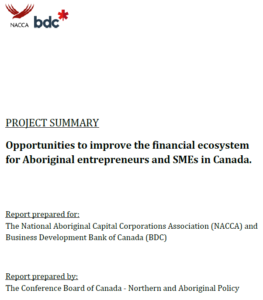 Ottawa, March 7, 2017 – The National Aboriginal Capital Corporations Association (NACCA) and the Business Development Bank of Canada (BDC) commissioned a study of the financial ecosystem that provides support for Aboriginal entrepreneurship in Canada. NACCA and its member Aboriginal Financial Institutions (AFIs) provide financing and support to Aboriginal entrepreneurs. The number of AFIs across Canada has grown to over 50 and include Aboriginal Capital Corporations, Aboriginal Developmental Lenders and Aboriginal Community Futures Development Corporations. In addition to BDC’s mainstream financial services and advice, BDC’s Aboriginal Banking Unit offers two specialized streams of financing for Aboriginal entrepreneurs including the “Aboriginal Business Development Fund,” and “Growth Capital for Aboriginal Business.”